Course and Project Takeaways

Hey, everyone! Welcome to another post by yours truly, Frank Zhang! The semester is almost over; class is done after this week. I had a lot of fun taking this class, even though I had signed up for this class because it was required for my minor. However, after going to class and engaging with classmates and learning new important information about the power and importance of online presentation platforms, I am grateful that I was able to discover a new hobby. I actually enjoy making podcasts now. I love the way podcasts can capture people’s attentions, and how I can change the tone of my voice to convey specific types of information. Listening to my podcast for review, I was struck at how professional I sounded. And I realize that I have the means to share my thoughts out to the world. I am not sure how many people will listen, but I hope you, my readers, will.

In addition, I learned great techniques to edit and share my podcast. As Kyle Devine had said, “In order for recording companies to bolster the claims of realism and presence and truth-to-the-original that pervade the history of sound reproduction, playback had to be faithful (utilising a frequency range wide enough to approximate the original sounds) – but it also had to be loud (capturing a dynamic range comparable to that of the original sounds” (Devine, p. 159).  In accordance to Devine’s declaration that recordings have to be realistic and loud enough to capture audience attention, I have employed various techniques to my podcast, such as dynamic sound compression, fade-ins, and fade-outs.

In addition, I very much enjoyed creating a blog for class. It has been absolutely amazing writing to readers who share the same passions of reading and writing as me, and it has also renewed the bright flames of love that I have for books. It is great to know that there are people with me who I can inspire and can be inspired by. This class had taught me about different types of zines in the beginning of class, and I had applied this knowledge to create a style of my own for my blog. In addition, the teacher showed us different types of blogs and pointed out their weaknesses and strengths; it has led me to understand the fundamentals of an informative blog. Blog designs should inform the audience what the website is about. Hopefully, my blog design had ensnared your attentions to wander around my blog.

Thank you for reading!

I’ll see you all next time!

References:

Devine, K. (2013). Imperfect Sound Forever: loudness, Listening Formations, and the Historiography of Sound Reproduction. Ottawa: Library and Archives Canada = Bibliothèque et Archives Canada.
Let’s Talk About Memes!!!

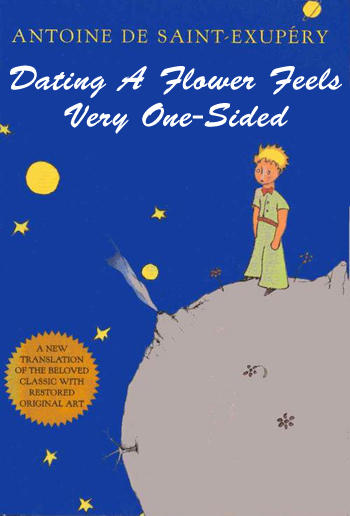
  1. Better Book Titles – Little Prince (https://knowyourmeme.com/memes/better-book-titles)

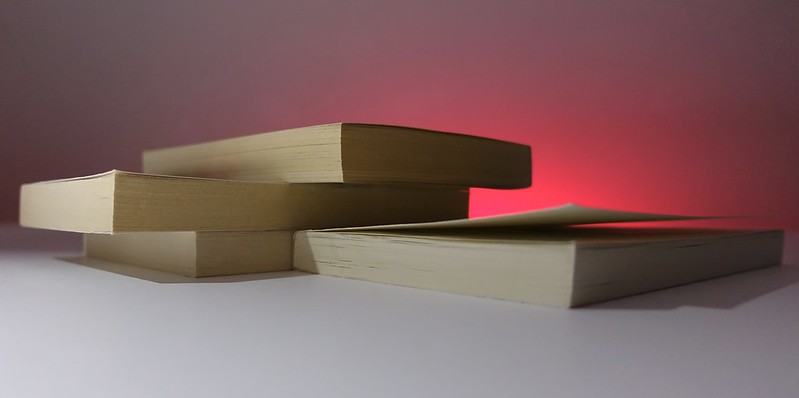
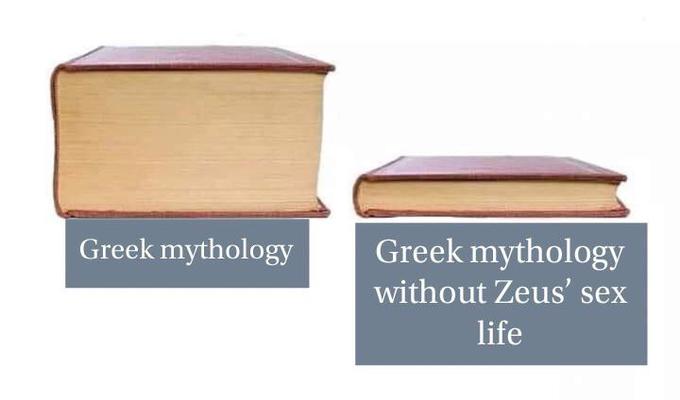
Thick Book vs. Thin Book (https://knowyourmeme.com/memes/better-book-titles)

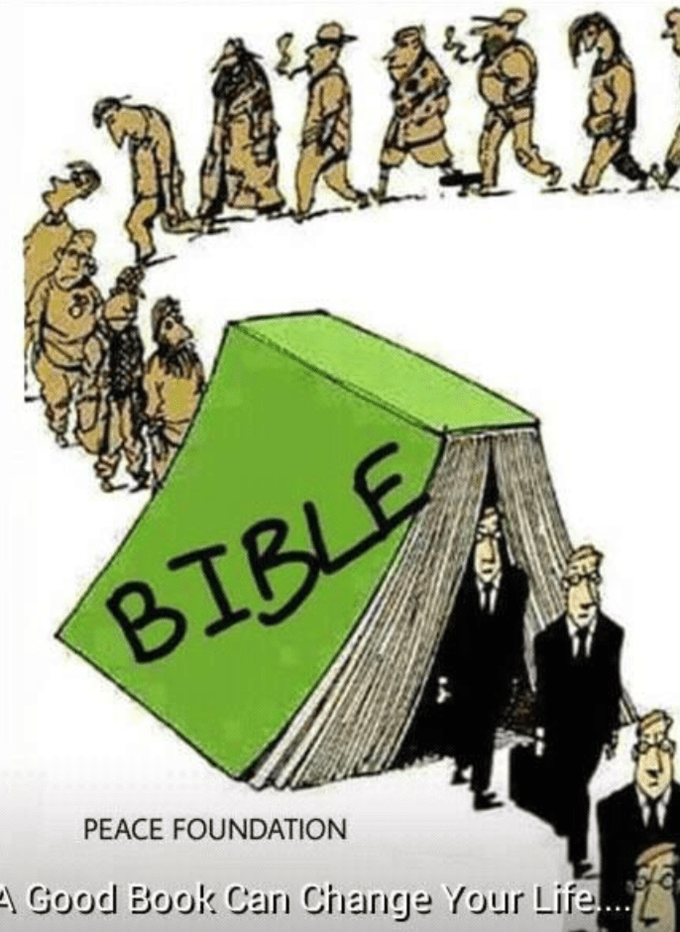
A Good Book Can Change Your Life (https://knowyourmeme.com/memes/a-good-book-can-change-your-life)

The “Better Book Titles” meme relates to my topic because it is book-related. It relates to my target audience because they can understand and appreciate the satirical takes on books that they may have read.

The “Thick Book vs. Thin Book” meme relates to my topic because it is also book-related. My target audience will find this meme relatable as they probably have encountered a book that had repetitive scenes that, if removed, could make the book remarkably shorter.

The “A Good Book Can Change Your Life” meme relates to my topic because it insinuates that people can improve themselves through reading, a concept that Bookiepop encapsulates. My target audience will relate to this meme because a majority of them should believe that books can change people for the better, and they will have fun looking at these memes of people being transformed by a giant book.

 2. According to Davison, “The ideal of a meme is the concept or idea conveyed. The ideal dictates the behavior, which in turn creates the manifestation. If the manifestation is a funny image of a cat and the behavior is using software to make it, then the ideal is something like ‘cats are funny’” (Davison, p. 123). Based on that definition, I can determine the ideals of my chosen memes. The ideal of the first meme is that the title of the “Little Prince” does not accurately reflect the book while the title, “Dating A Flower Feels Very One-Sided”, is a more apt title that encompasses the plot of the story.

The ideal of the second meme is that, without the history of Zeus’s history of impregnating Greek women, the Greek mythology would be much smaller as most of the events center around Zeus’s demigod children.

The ideal of the third meme is that good books can make people more successful in life.

3.  According to Davison, “The behavior of a meme is the action taken by an individual in service of the meme” (Davison, p.123). Therefore, the behavior is the steps taken in the process of creating the meme.  In regards to the Better Book titles meme, Dan Wilbur, a writer/comedian, had created the meme and posted it on his blog (Know Your Meme). He had changed the title of The Alienist to a satirical title (Know Your Meme). Soon afterwards, many online websites and respectable outlets, such as TIME and NPR, promoted the blog, prompting internet users to submit their own takes of the meme to Wilbur (Know Your Meme). Eventually, someone submitted the meme I have chosen, the Little Prince book meme, to the blog (Know Your Meme).

The Thick Book vs. Thin Book meme was posted on Reddit on June 17th, 2019 by the Redditor CosmowYoung (Know Your Meme). He had taken a picture of a thick book next to a thinner book. He had written the caption “Greek Mythology” under the bigger book and “Greek Mythology without Zeus’s Sex Life” under the smaller book (Know Your Meme).

The behavior of the meme, A Good Book Can Change Your Life, occurred when a Facebook Christian group downloaded a cartoon picture of men walking through a book, photoshopped the word ‘bible’ on the book and posted the picture on their Facebook wall (Know Your Meme).

4. According to Davison, “The manifestation of a meme is its observable, external phenomena. It is the set of objects created by the meme, the records of its existence. It indi- cates any arrangement of physical particles in time and space that are the direct result of the reality of the meme” (Davison, p. 123). 

The manifestation of the first meme is the Little Prince book cover with a changed title, “Dating a Flower Feels Very One-Sided.” The manifestation of the second meme is a picture of two books, where one represents Greek Mythology and the other represents Greek Mythology without Zeus’s love life. The manifestation of the third meme is haggard men walking into a book, captioned Bible, coming out with fresh business suits.

5. The different manifestations will appeal to my target audience because the memes contain humor related to books. The first manifestation provides a satire of book titles and reveals how inaccurate book titles really are, which is a thought that most of my audience will understand. The second manifestation provides the idea of how books can be clogged up with one repetitive motif that takes up hundreds of pages, and my audience who have experienced such books can find humor in such a picture. The third manifestation provides the idea that people who read a specific book become better people, a thought my audience can find either correct or injurious, but overall all of them will find it humorous.

References:

Davison, P. “The Language of Internet Memes.” The Social Media Reader

https://knowyourmeme.com/memes/better-book-titles)

https://knowyourmeme.com/memes/better-book-titles

https://knowyourmeme.com/memes/a-good-book-can-change-your-life

Check out my new podcast!

Hey everyone!

Sorry for the wait! Ever since the quarantine, it’s been stressful thinking of posts to write. However, I am putting up a podcast that I think you all will enjoy! My latest podcast promotes a cool nonprofit organization called Raising a Reader (check out their website, raisingareader.org). Raising a Reader promotes reading out-loud to children, which helps improve their literacy and their relationship with their parents and books. The format of this podcast is education. In this podcast, I talk about Raising a Reader’s Theory of Change and ways to read to children efficiently. In addition, I have used two free-to-use songs in my podcast. The first song is 24 Happy Hours a Day by Igor Khainskyi. The second song is Summer by Bensound. In addition, I wouldn’t have been able to find the motivation to complete this podcast without the support of my group: Annabella Bracco, whose website is “What they don’t tell you about Public Relations”(https://prcollegeinternship.school.blog/2020/02/10/example-post/); Andy Balboa, whose website is “Silly Gaming Review” (https://sillyreviews.game.blog/); Nikos Karris-Flores, whose website is “Sketch Book Music” (https://sketchbookmusic.art.blog); and Emma Garibian, whose website is “Emma Garibian Photography” ( https://emmagaribianphotography.wordpress.com). Check out their websites! They are wonderful people!

PSA! (and more details)

Hey everyone!

I am partnering with Raising a Reader for my website. Raising a Reader is a non-profit organization that helps children by providing services that allow them to appreciate reading. Here is the link to my PSA : https://soundcloud.com/frank-furter-821041250/psa-frank .

The new blog post that I have uploaded contains a PSA for Raising a Reader. Raising a Reader is a non-profit organization that helps children develop their reading skills and appreciate reading as an important habit. My audio file is to endorse Raising a Reader by giving the listeners important information about the organization. The music used is Title: 24 Happy Hours a Day by Igor Khainskyi. The license is free to use as long as I cite the provide the details of the music, which I just did.

  1. How would you describe the fidelity of your recording? How does the fidelity of your voice-over compare with the fidelity of your background music, and how do these levels relate with concepts of loudness as described in Kyle Devine’s article?

According to Kyle Devine, “In order for recording companies to bolster the claims of realism and presence and truth-to-the-original that pervade the history of sound reproduction, playback had to be faithful (utilising a frequency range wide enough to approximate the original sounds) – but it also had to be loud (capturing a dynamic range comparable to that of the original sounds” (Devine, 159).  I can describe the fidelity of my altered audio recording is that it captures the essence of my original audio, except for one detail. I increased the loudness of my voice audio because it was the important part of my PSA so it had to be louder than the background music. However, for my background music, the fidelity was changed as I altered the sound more than once. I faded-in at the beginning and faded-out towards the end.

  1. How did you control the fidelity and loudness of various components in your file using techniques we have learned in class, and how were your decisions related to your audience’s needs as listeners?

  I used the fade-in and fade-out technique. I faded in with the music at the beginning because I wanted the audience to adjust to the background music so they are not startled by it. And then I also faded out at the end of the music because that was when I was closing my segment, so I thought that by fading out, I would signal to my audience that I was going to stop speaking soon so they will anticipate the end, instead of being surprised.

Thank you!

New Video!!!

My video link: https://www.youtube.com/watch?v=bRNkllerYa4

This video is created by Frank Zhang. I am the creator of the blog, BookiePop, which can be found on https://bookiepopworks.business.blog. My target audience are people who love books or people who just want to start reading again after stopping. The purpose of this video is to share how to access my book group on the website Bookclubz and how I will be choosing my books and discussion questions for my upcoming book blog posts. In general, the purpose of my blog is to write about books, and one aspect of my blog is answering discussion questions found on Bookclubz (https://bookclubz.com). The reason why I have chosen these specific discussion questions is because they are very analytic and will help me become a better reader. In addition, I chose Bookclubz because it allows me to message my followers as well add a wishlist of all the books I plan on reading so my followers can be ready to get them, if they choose to read along with me.

The website that I have used for this video is Bookclubz, which I have already provided a link for above. I did not use Screencast. Instead, I used QuickTime Player.

I expect my viewers to find my video on my homepage for my blog. In addition, they can also find my website if they want a tutorial on how to sign in to Bookclubz and use its features by typing in “Bookclubz” + “BookiePop” in Youtube and searching the results. I know that people may not want to watch a four minute video, but I try to be as enthusiastic as possible and I think that Bookclubz is actually a pretty neat website that my audience will find especially cool. In her article, Christine T. Wolf talks about why people search for do-it-yourself videos. One reason people search for these types of videos is because they have a problem and need a solution for solving it (Wolf, 2016). In addition, Wolf describes how people process the information in the videos to determine if they have enough time and energy to do it themselves (Wolf, 2016). For example, Wolf recalls a situation when a woman watched several videos on how to fix a sump pump and then ultimately called in a professional because, even though she knew the steps, she did not have the time nor expertise to do it herself (Wolf, 2016). Hopefully, with my video, the viewers will determine that the steps are fairly easy and that little time needs to be spent, so they will create a Bookclubz account and join me.

References:

https://bookclubz.com

Wolf, C. T. (2016, June 6). DIY videos on YouTube: Identity and possibility in the age … Retrieved from https://www.researchgate.net/publication/304001043_DIY_videos_on_YouTube_Identity_and_possibility_in_the_age_of_algorithms

Week 5 Blog Post

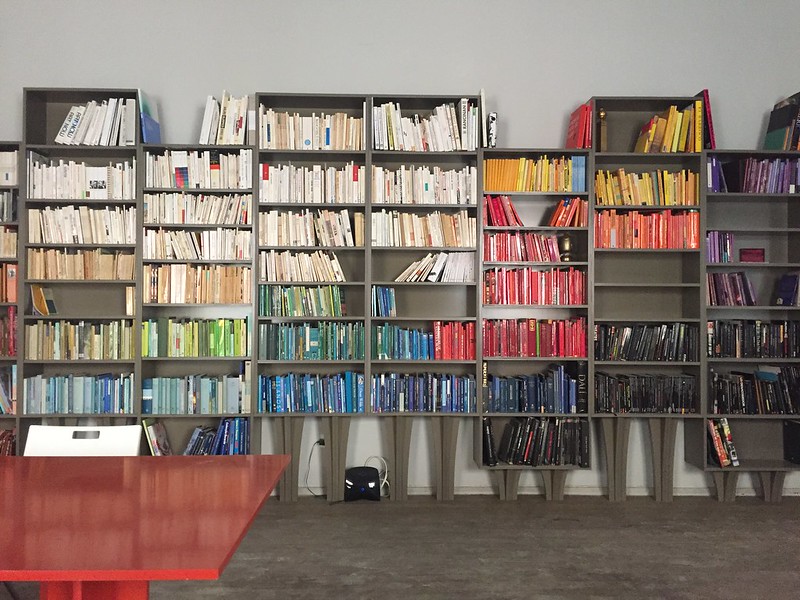
1. I wanted to create an image that the audience would remember distinctly in their heads. I wanted to create a mysterious yet old-fashioned look to my header. The reason I tried to make it look retro was because I think that people have read less books in our current era, and I wanted to add a nostalgic ambience to this image as if they were looking at a distant past. In addition, I wanted it to look mysterious by adding a green and red filter so my audience may be curious by what lies within my website. I want the audience to see books from my point of view, as a source of nostalgia, mystery, and wonder. In addition, I noticed that both images were a little symmetrical so I split both images in half so it looked like the two images had merged into one. I did that because I wanted to convey this message: the deeper you wade into this website, the more mysterious and fantastical will my posts become. So that is why I did not blur the left side and only the right side of my new image.

2. I found my images on Flickr. I know that I can use the images because they have the Creative Commons license and therefore I have the freedom to redistribute it and edit it to my liking only if I reference the original author, give a link to the license, and let the readers know if I made any changes.

3.I used the cutout function to create a rectangle out of the lincoln inn library picture. I used the effect function to turn the library picture red and the used book store picture green. I used the liquify tool ‘Push’ to create the swirl effect on the red portion of the picture. The reason why I chose green and red is because they are opposite colors, so I thought that there may be symbolism in having two opposite types of book location covered in opposite hues. Then, on the WordPress special effect feature, I used the orange color effect to give the overall picture an orangish tint. In Lee Manovich’s “Inside Photoshop,” Manovich explores the different types of functions that can be used in Photoshop. Manovich states, “While some of these filters can be directly traced to previous physical and mechanical media such as oil painting, others make a reference to actions or phenomena in the physical world that at first appear to have nothing to do with media”(Manovich). Likewise, I experienced both types of filters. The cut-out and color filters both have backgrounds to the physical arts. However, the Push effect was a “phenomena in the physical world” that allowed me to distort parts of the image into a blurry swirl. In addition, Manovich says, “As we saw with the wave filter, the same algorithm can generate an abstract image or a realistic one” (Manovich). In my case, I used the filter to try to distort reality minimally enough that it looked neither realistic nor abstract, but a strange culmination of both.

4) A defining feature of painting programs was the tools (Davison 208). My experience using Pixlr was similar to using a bitmap. First of all, as Davison states, “ [Windows Paint] included… ‘shape’ tools that allowed the user to click and drag to create rectangles, circles, and triangles” (Davison, 280). Similarly, I used a shape tool in production of my image, although it was for different purposes. Davison describes using the shape tool to create outlines of shapes. However, the shape tools I used were different as they cropped the picture I had selected into a shape that I chose, a rectangle. In addition, Davision states, “A bitmap is a two-dimensional presentation of the bits in a computer’s memory. These bits could either be ‘on’ or ‘off’ and when these states were then rendered as black and white, respectively, the bitmap produced a visible image’ (Davison 278). When I used certain paint features in Pixlr, such as Blur or Push, I experienced the ‘on’ effect as I could change the looks of the pixels by sliding over the image with my cursor. However, I did not experience the ‘off’ effect as it did not revert back to its original state when I rubbed the same spot with my cursor. I had to use the undo function. In conclusion, there are similarities such as similar tools and the ‘on’ effect, but there are also differences such as having different functions for those tools and no ‘off’ effect.

References

Davison, Patrick. “Because of the Pixels: On the History, Form, and Influence of MS Paint.” [PDF link]

Manovich, Lev. “Inside Photoshop” Computational Culture. [PDF link]

Introductions

Introductions

My forthcoming website will be about the impact of books on different people. The purpose of my forthcoming website is: to find any meaningful connections that people may have with any books that they have read in the past or are currently reading. Sometimes, books may have important themes, characters, endings, symbols, or prose that startle us and affect the way we experience life. My blog will therefore chronicle the visceral effects that books have on our mental states and if our lives have changed for the better or worse because of books. Since I can ask basic questions about books and because I enjoy reading and collecting books, I therefore have the minimum qualifications to run a book blog. My target audience is people who enjoy reading books, people who want to start reading books again and need inspiration, and people who just enjoy reading introspective blogs that explore book themes and character development and all that book slang. The general goal of my blog is to record important relationships between readers and books. In addition, I want to find general themes between these connections and find out what impacts readers the most. I also want to discover how people developed strong relationships to books. I also want to write about what kinds of genres affect people the most, and I want to write about what themes affect people the most. I want to write about people who are obsessed about books and I want to write about how that obsession affected their lives. In addition, I want to explore any new behaviors or habits that people pick up while reading books. I know that people sometimes say that they have been deeply affected by a book or that a certain book changed them forever. I want to know how realistic their claim is. I want to know if books can actually change people on a deeply psychological level or if they just change our reading and concentration habits. This website will not be a book review website. Instead, it will review the relationship between book and human.

Target Audience and Blog Expectations

My target audience is book-lovers, people who like to explore book themes, people who want to explore psychological growth, people who are just curious about books or people who just like to read introspective blogs. My promise to my futures readers are that I will try to make this blog as interesting as possible to book readers or people curious about books, and that what I write about will always be related to books. I want to establish an environment that can get people to re-evaluate the way they view books and possibly respect books as irreplaceable family members or companions. In addition, I vow to always provide a quick book summary for the book I am about to discuss, followed by a short reflection of its themes, and how I or someone else has been personally affected by the book contents.

Why I Chose Flickr as My Image Source

According to Lawrence Lessig, after years of copyright disputes over creations on the Internet have festered on in public courts and lawsuits, hybrid economies have been integrated into the internet environment(Lessig, 163). Certain types of hybrid economies allow for the distribution of goods without the exchange of money (Lessig, 163). One such example of a hybrid economy is the online picture-sharing website Flickr. As Lessig says, “Flickr, from its very birth, was a photo-sharing site that built sharing into its DNA. Indeed, it facilitated sharing by setting “public” as the default viewing state for all uploaded images and giving people the option to license their photos explicitly under a Creative Commons license” (Lessig, 163). Therefore, I am using Flickr for pictures because Flicker provides the opportunity for me to share and use other people’s pictures without infringing upon copyright licenses (Lessig). In addition, I have followed the copyright regulations as per instruction by crediting the authors for their pictures and including a link to the creative license. By putting their pictures out in the Creative Commons, these creators gain free publicity while also providing content for other people to use for their own projects (Lessig, 163).

Reference

Lessig, L. (2009). Remix: making art and commerce thrive in the hybrid economy. New York: Penguin Books.

Creative Commons license: https://creativecommons.org/licenses/by/2.0/legalcode
Photo taken by Dean Hochman
Photo taken by John Kannenberg. Creative Commons: https://creativecommons.org/licenses/by-nc-nd/2.0/legalcode
Design a site like this with WordPress.com
Get started