Introductions
My forthcoming website will be about the impact of books on different people. The purpose of my forthcoming website is: to find any meaningful connections that people may have with any books that they have read in the past or are currently reading. Sometimes, books may have important themes, characters, endings, symbols, or prose that startle us and affect the way we experience life. My blog will therefore chronicle the visceral effects that books have on our mental states and if our lives have changed for the better or worse because of books. Since I can ask basic questions about books and because I enjoy reading and collecting books, I therefore have the minimum qualifications to run a book blog. My target audience is people who enjoy reading books, people who want to start reading books again and need inspiration, and people who just enjoy reading introspective blogs that explore book themes and character development and all that book slang. The general goal of my blog is to record important relationships between readers and books. In addition, I want to find general themes between these connections and find out what impacts readers the most. I also want to discover how people developed strong relationships to books. I also want to write about what kinds of genres affect people the most, and I want to write about what themes affect people the most. I want to write about people who are obsessed about books and I want to write about how that obsession affected their lives. In addition, I want to explore any new behaviors or habits that people pick up while reading books. I know that people sometimes say that they have been deeply affected by a book or that a certain book changed them forever. I want to know how realistic their claim is. I want to know if books can actually change people on a deeply psychological level or if they just change our reading and concentration habits. This website will not be a book review website. Instead, it will review the relationship between book and human.
Target Audience and Blog Expectations
My target audience is book-lovers, people who like to explore book themes, people who want to explore psychological growth, people who are just curious about books or people who just like to read introspective blogs. My promise to my futures readers are that I will try to make this blog as interesting as possible to book readers or people curious about books, and that what I write about will always be related to books. I want to establish an environment that can get people to re-evaluate the way they view books and possibly respect books as irreplaceable family members or companions. In addition, I vow to always provide a quick book summary for the book I am about to discuss, followed by a short reflection of its themes, and how I or someone else has been personally affected by the book contents.
Why I Chose Flickr as My Image Source
According to Lawrence Lessig, after years of copyright disputes over creations on the Internet have festered on in public courts and lawsuits, hybrid economies have been integrated into the internet environment(Lessig, 163). Certain types of hybrid economies allow for the distribution of goods without the exchange of money (Lessig, 163). One such example of a hybrid economy is the online picture-sharing website Flickr. As Lessig says, “Flickr, from its very birth, was a photo-sharing site that built sharing into its DNA. Indeed, it facilitated sharing by setting “public” as the default viewing state for all uploaded images and giving people the option to license their photos explicitly under a Creative Commons license” (Lessig, 163). Therefore, I am using Flickr for pictures because Flicker provides the opportunity for me to share and use other people’s pictures without infringing upon copyright licenses (Lessig). In addition, I have followed the copyright regulations as per instruction by crediting the authors for their pictures and including a link to the creative license. By putting their pictures out in the Creative Commons, these creators gain free publicity while also providing content for other people to use for their own projects (Lessig, 163).
Reference
Lessig, L. (2009). Remix: making art and commerce thrive in the hybrid economy. New York: Penguin Books.
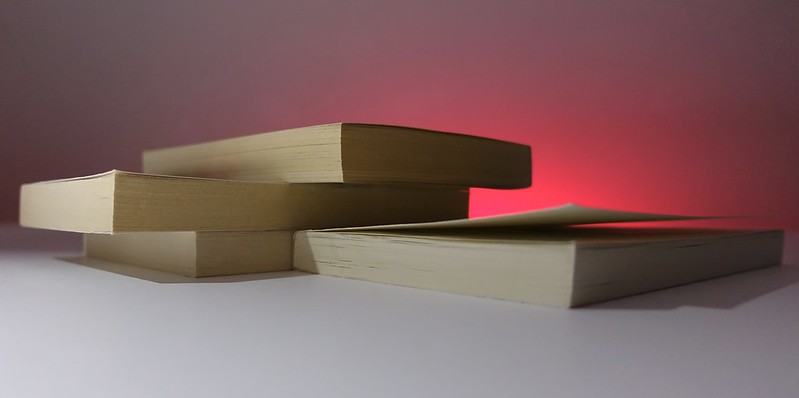
Photo taken by Dean Hochman
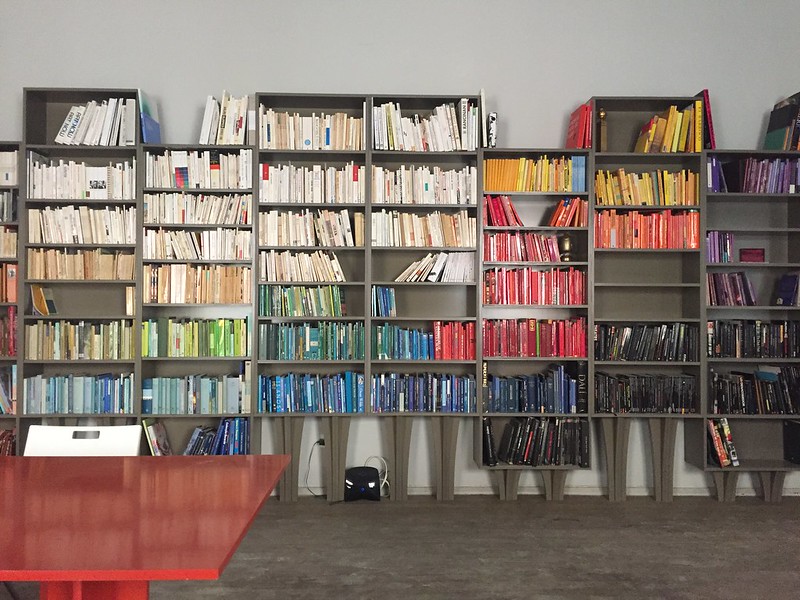
 Bookiepop